Daily Brief: Key updates from the Middle East
Here’s your AnewZ Daily Brief for 1 October 2026. These are the top five stories shaping the Middle East.
AnewZ's Daybreak on 21 July covered the latest escalation in the U.S.-Iran conflict, rising trade tensions between the United States and Canada, and key regional and international developments.
AnewZ's Daybreak on 20 July covered mounting tensions in the Middle East, political developments in the UK, and key regional and international stories.
U.S. forces say they have completed strikes on Iranian military sites near the Strait of Hormuz. Iran responded with missile attacks on an American base in Jordan, marking a sharp escalation in tensions between the two sides.
Israeli media reports have provided new details on the transformation of the Mossad under outgoing director David Barnea, describing what officials reportedly called an internal “biometric revolution” focused on technology, intelligence operations and agent protection.
Iran’s Foreign Ministry spokesperson Esmaeil Baghaei said on Monday that the U.S. would bear direct responsibility for any escalation in West Asia after Iran and Israel resumed strikes for the first time since the April ceasefire.
Trump reportedly lashed out at Netanyahu on Monday over Israel's escalation in Lebanon, describing the Israeli leader as "crazy" and warning that further military action would deepen Israel's international isolation, according to a report by Axios.
Finance ministers from the Group of Seven (G7) have urged the International Monetary Fund (IMF) and the World Bank to increase support for countries hardest hit by the conflict in the Middle East.
Pakistan has deployed around 8,000 troops, fighter jets and air defence systems to Saudi Arabia under a mutual defence agreement, according to security officials and government sources familiar with the arrangement.
Indian Prime Minister Narendra Modi will visit five countries, including the United Arab Emirates and several European states, from 15–20 May, as rising oil prices driven by the Middle East conflict puts pressure on India’s foreign reserves, the Foreign Ministry said.
Leaders of Southeast Asian nations gathered in the Philippines on 8 May for an ASEAN summit focused heavily on the economic fallout from the Middle East conflict, with member states seeking a coordinated response to rising energy and food security risks.
The U.S. military said it carried out retaliatory strikes against Iran on Thursday (7 May), as Iran’s military leadership accused Washington of violating a Pakistani-mediated ceasefire agreed to back in April.
Asian stocks surged to record highs on 7 May as investors priced in growing hopes of a potential Middle East peace deal, while oil prices eased and the U.S. dollar weakened amid shifting global risk sentiment.
A Pentagon official provided the first official estimate of the cost of the U.S. war in Iran on Wednesday (29 April), telling lawmakers that $25 billion had so far been spent on the conflict, most of it on munitions. Earlier, Donald Trump said that the U.S. had "militarily defeated" Tehran.
The president of the International Committee of the Red Cross (ICRC), Mirjana Spoljaric Egger, visited Tehran to address “urgent humanitarian concerns” following the U.S.–Israel war on Iran, according to an ICRC delegation statement.
The United Nations has said that at least 21 people have been executed in Iran and more than 4,000 arrested since the outbreak of war involving the United States and Israel on 28 February.
The decision by the United Arab Emirates to leave OPEC+ on 1 May has put renewed focus on one of the most influential groups in global energy - and how its decisions can shape oil prices worldwide.
China’s reaction to the latest tensions around Iran has been firm in tone but restrained in action. It has condemned strikes, called for dialogue and stepped up diplomacy but shown no sign of military involvement or appetite for escalation.
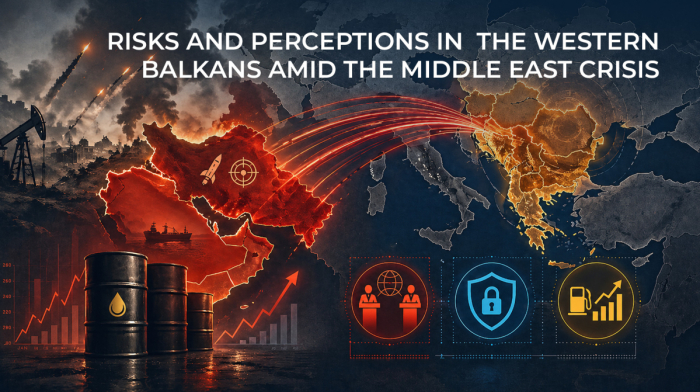
We live in an interconnected world where each international and regional crisis has far-reaching consequences. Every region, no matter how peripheral or small, can experience the repercussions of such geopolitical and geoeconomic pressures.
Iran’s Permanent Mission to the United Nations in New York strongly protested against U.S. and Israel targeting multiple civilian infrastructure related to communications and space centre facilities, and also urged regional countries to prevent their territory being used for "military aggression".
Pakistan is confident it can bring Iran to talks with the United States, a senior official said, citing “positive signals” from Tehran, as JD Vance is reportedly set to visit Islamabad on Tuesday for peace talks, according to Axios.
Iran accuses the United States of breaching a ceasefire after a commercial ship was seized in the Gulf of Oman, vowing retaliation, as Israel warns south Lebanon residents to avoid restricted areas.
European countries should expand the role of natural gas in their energy systems to reduce the risk of supply shocks caused by international crises, an energy industry chief has said.
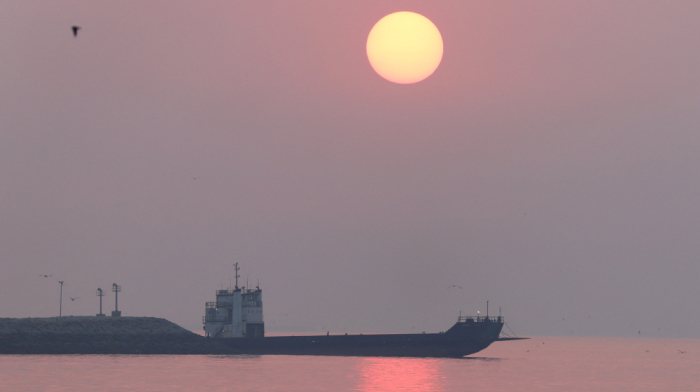
Iran reopened the Strait of Hormuz to commercial shipping on Friday (17 April) for the first time since the U.S. and Israel killed Iran's ex-Supreme Leader in air strikes, triggering the Middle East conflict, at the end of February. A U.S. blockade on Iranian ports, however, remains in force.
You can download the AnewZ application from Play Store and the App Store.