India launches heaviest communications satellite for navy
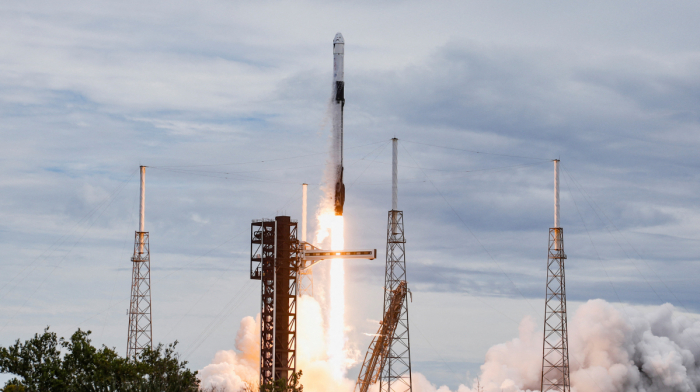
India has launched its heaviest-ever communications satellite, GSAT-7R, designed to boost the Indian Navy’s maritime operations and secure space-based communications.
Nvidia has announced a major partnership with the South Korean government and top companies to strengthen the country’s artificial intelligence capabilities by supplying hundreds of thousands of its advanced GPUs.
Character.AI will ban under-18s from chatting with its AI characters and introduce time limits, following lawsuits alleging the platform contributed to a teenager’s death.
A small, silent object from another star is cutting through the Solar System. It’s real, not a film, and one scientist thinks it might be sending a message.
A 13-year-old boy in central Florida has been arrested after typing a violent question into ChatGPT during class, prompting an emergency police response when school monitoring software flagged the message in real time.
Nokia chief executive Justin Hotard said artificial intelligence is fuelling a structural growth cycle similar to the internet expansion of the 1990s, but rejected fears that investor enthusiasm has reached unsustainable levels.
NASA has announced that it will reopen bidding for its flagship U.S. moon landing contract, citing mounting delays in Elon Musk’s SpaceX Starship lunar lander project.
China has accused the United States of stealing sensitive data and infiltrating its National Time Service Centre, warning that such breaches could have disrupted communications, financial systems, power supplies, and the international standard time network.
Chinese tech giants, including Alibaba-backed Ant Group (688688.SS) and e-commerce company JD.com have halted plans to issue stablecoins in Hong Kong after the government raised concerns about the increasing influence of privately controlled currencies, the Financial Times reported on Saturday.
Apple has pledged to increase its investment in China despite ongoing tensions between Washington and Beijing, CEO Tim Cook said during a meeting with China’s industry minister.
SpaceX launched its 11th Starship from Texas on 13 October, landing in the Indian Ocean ahead of testing an upgraded version for future moon and Mars missions.
From Sunday, all non-EU citizens, including British visitors, will face new biometric checks when entering and exiting the European Union under its long-delayed Entry/Exit System (EES).
The Royal Swedish Academy of Sciences announced that the 2025 Nobel Prize in Chemistry has been awarded to Susumu Kitagawa of Kyoto University, Richard Robson of the University of Melbourne, and Omar Yaghi of the University of California.
The 2025 Nobel Prize in Physics has been awarded to John Clarke, Michel H. Devoret, and John M. Martinis for their groundbreaking discovery of macroscopic quantum mechanical tunnelling and energy quantisation in electric circuits.
United States chipmaker AMD will supply artificial intelligence chips to OpenAI in a multi-year agreement that could generate tens of billions of dollars in annual revenue and give the ChatGPT maker the option to acquire up to 10% of the company.
The International Astronautical Congress in Sydney brought together over 7,000 delegates from 99 countries, focusing on sustainable space activity, inclusive leadership, and the growing role of emerging nations in the global space ecosystem.
The Nobel Prize in Physiology or Medicine 2025 has been awarded jointly to Mary E. Brunkow, Fred Ramsdell, and Shimon Sakaguchi for their ground breaking discoveries on peripheral immune tolerance.
Swiss researchers are developing biocomputers made from living cells, aiming to merge biology and computing in an energy-efficient system once confined to science fiction.
Snapchat will start charging users who store more than 5GB of photos and videos in its Memories feature, prompting backlash from long-time users.
NASA officials on Tuesday said the agency's first crewed flight in its Artemis programme - a trip around the moon and back - is on track for launch in April and could potentially be moved up to February 2026.