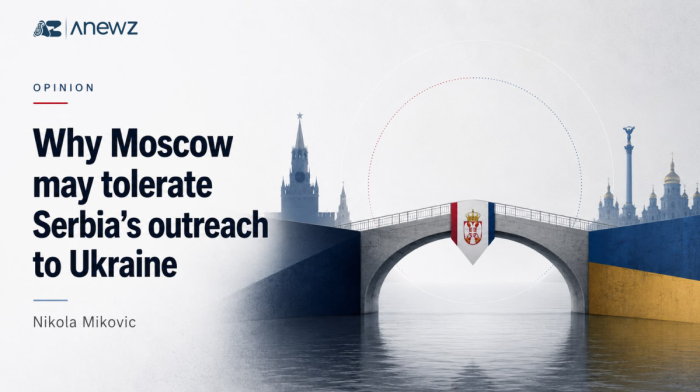
Why Moscow may tolerate Serbia's outreach to Ukraine
Aleksandar Vučić's visit to Kyiv on 15 July appeared to send a geopolitical signal. But the significance of the trip lies less in the journey itself than in the limits Serbia carefully observed.

Artificial intelligence is no longer merely a technological revolution. It is becoming one of the defining geopolitical contests of the 21st century.
Ukraine's attacks on Russian refineries and export facilities have triggered a fuel crisis while exposing deeper weaknesses in Russia's oil logistics network. The strikes have revealed limited spare capacity, ageing infrastructure and vulnerabilities likely to outlast the war.
In June 2026, Anthropic released Claude Fable 5, then the most powerful publicly available artificial intelligence model. Within days, researchers bypassed its safeguards, highlighting a growing reality: AI powerful enough to defend can also be used to attack.
Defence debates often begin in the wrong place. Should Türkiye seek a return to the F-35 programme? Should it acquire more Eurofighters? When will the indigenous KAAN fighter mature into an operational capability? Which air and missile defence systems should come next?
On 10 July, off the coast of Hainan, a Long March-10B rocket lifted from the Wenchang commercial space launch site. Around six minutes later, its first-stage booster descended towards a recovery vessel at sea.
The fragile diplomatic pause between the U.S. and Iran is rapidly eroding as renewed military exchanges and attacks on shipping expose the limits of June's agreement and raise fresh doubts over the prospects for lasting negotiations.
The Anaklia deep-sea port project has returned to Georgia's strategic agenda under a fundamentally different model. The move reflects the growing importance of Georgia's role in the Middle Corridor following Russia's full-scale invasion of Ukraine.
In April 2026, Azerbaijan’s National Assembly criminalised AI-generated sexual deepfakes created or shared without consent. The reform recognised digital sexual abuse as a serious crime. Cyberflashing should now be next.
Europe’s search for new energy suppliers is creating new strategic opportunities for Africa, with major pipeline projects promising to reshape energy diplomacy while deepening geopolitical competition.
History rarely enters international politics in isolation. More often, it arrives accompanied by shifting alliances, changing strategic calculations and evolving national interests.
In central bank vaults around the world, a quiet shift is underway. Gold is moving home. What was once stored comfortably in New York, London or other established financial centres is increasingly being reviewed, diversified or repatriated. This is not panic. It is prudence.
Russia and NATO appear to be entering a new phase of strategic rivalry as hopes of renewed diplomacy fade and both sides prepare for a prolonged period of confrontation.
Russia’s greatest strategic asset is not only military power, but political will
Will the negotiations in Switzerland succeed? That has become the dominant question surrounding the latest round of US-Iran diplomacy. It is also the wrong one.
Belarus has not sent its army into Ukraine, but it is no longer outside the war.
The European Union is facing a strategic problem. It wants influence beyond its borders, but enlargement has become slower, harder and more politically contested. The South Caucasus may be one of the first places where Europe learns how to manage that contradiction.
Nearly twenty years after Condoleezza Rice spoke of the “birth pangs of a new Middle East”, the old regional order is fading but no clear replacement has emerged. Instead, a more complex and multipolar landscape is taking shape, raising a critical question: who will help shape what comes next?
Poland has built much of its wartime image on one claim: it is Ukraine’s closest friend in Europe. There is truth in that claim.
Veteran business leader, diplomat and board adviser, Mehmet Öğütçü, reflects on more than four decades of hiring and leadership experience, offering practical advice to graduates and young professionals navigating an increasingly competitive labour market.