How global challenges complicate Iran’s domestic crisis
As tensions between Iran and the U.S. persist, authorities in Tehran are facing another problem—this time at home.

Over the past two years, Azerbaijan's engagement with Africa has evolved from promising diplomatic overtures into substantive, results-driven partnerships that are already delivering tangible benefits.
The United States’ actions in Venezuela have clearly demonstrated not only that Latin America remains firmly in Washington’s geopolitical orbit, but also that the U.S. is the only global superpower.
Japan's elevated interest in Central Asia reflects a combination of economic motives, such as access to resources and investment opportunities, as well as geopolitical goals aimed at promoting regional stability and enabling a counterbalance to other major powers.
Since the United States and other Western countries remain hesitant to formally recognise and engage with the Taliban-led government, Afghanistan has been left with little choice but to look closer to home.
Over the past two decades, Azerbaijan has transformed itself from a post-Soviet bureaucracy into a pioneer of digital governance in its region.
Almost seventeen years ago, in December 2008, I worked with a film crew shooting a documentary on the Armenia and Azerbaijan conflict for Al Jazeera English.
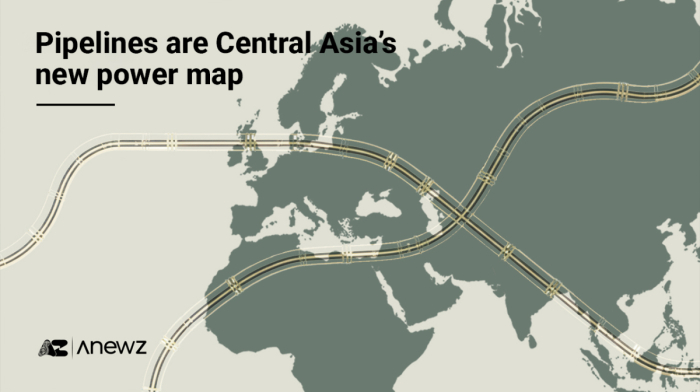
Pipeline routes in Central Asia are a historically embedded and structurally constrained form of geopolitics. In this region, infrastructure serves as a means of transportation and a crucial instrument of power and strategic autonomy.
The tectonic plates of global trade and geopolitics are shifting, demanding that regional cooperative structures evolve to match new strategic realities.
In an era marked by geopolitical uncertainty, economic fragmentation, and accelerating climate pressures, meaningful diplomacy is no longer defined by rhetoric alone, but by clarity of purpose and convergence of vision.
The European Union stands at a crossroads: to receive new members and accelerate the enlargement process in order to strengthen its role in the international arena, or to risk strategic stagnation by delaying expansion in favor of internal reform.
After decades of discussions on the obsolescence of political realism, we are back to hard power dominating global politics. The U.S. became the biggest global power to accept this change after unveiling the new National Security Strategy last week.
The latest clashes between Thailand and Cambodia mark a dangerous escalation in one of Southeast Asia’s oldest and most sensitive disputes.
The fourth European Conference on Azerbaijani Studies was held in Vienna, Austria, on 5 December, by the European Network for Azerbaijani Studies and the Strategic Consultancy Group.
Central Asia has been one of the important arenas of international geopolitics, dictating power dynamics with its abundant natural resources and strategic location.
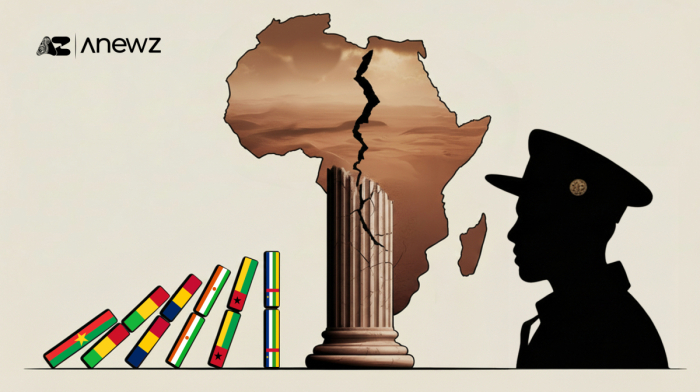
Military coups have reappeared across West Africa and the Sahel. Recent events in Guinea-Bissau and coup attempt in Benin add to a growing list of abrupt power shifts over the past five years.
The C5+1 meeting between Central Asian leaders and U.S. President Donald Trump in Washington in early November signals the ascent of Central Asia to the status of a pivot in the bipolar geopolitical order.
Middle Corridor’s rising strategic importance, and new dimensions of its development demand closer scrutiny
For nearly three decades following the dissolution of the Soviet Union, the international system was defined by a singular, overwhelming reality: American unipolarity.
You can download the AnewZ application from Play Store and the App Store.