President Trump’s Iran threat over Hormuz: Words vs reality
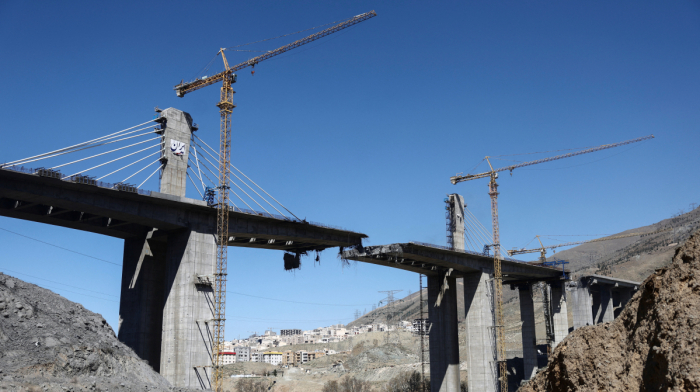
President Donald Trump warned Iran he would target power plants and bridges unless it reopened the Strait of Hormuz by Tuesday night - but what actually happened?
Recent U.S. complaints about NATO allies and threats to quit the alliance are pushing European countries to seek alternative security arrangements, Spanish Foreign Minister Jose Manuel Albares said on Tuesday.
In an urgent response to escalating global energy instability, South Korean Presidential Chief of Staff Kang Hoon-sik announced on Tuesday that he will embark on a high-stakes diplomatic tour to Kazakhstan, Oman, and Saudi Arabia.
Oil prices climbed sharply on Tuesday as the world watched anxiously for a U.S.-imposed deadline for Iran to reopen the Strait of Hormuz, the crucial waterway through which roughly a fifth of global oil passes.
The UN Security Council has failed to back a Bahraini resolution aimed at reopening the Strait of Hormuz, after China and Russia used their vetoes on Tuesday (7 April). The draft resolution called for coordinated "defensive measures" to ensure freedom of navigation in the strait.
U.S. President Donald Trump threatened Iran's "whole civilisation" on Tuesday in a post on social media. Meanwhile, the UN failed to reach an agreemement on a resolution aimed at reopening the Strait of Hormuz, after China and Russia used their vetoes.
U.S. President Donald Trump warned Iran it could face devastating strikes within hours unless it agrees to a ceasefire by Tuesday night, escalating tensions with Tehran.
U.S. President Donald Trump on Monday told reporters that Iran could be taken out in one night, "and that night might be tomorrow night," warning Tehran it had to make a deal by Tuesday night or face wider bombing raids.
Iran has rejected a U.S.-backed ceasefire proposal, insisting any agreement must deliver a permanent end to the war, according to state media on Monday.
Oil prices fell in choppy trading on Monday as investors awaited clarity on talks between the U.S. and Iran and remained cautious about sustained supply losses caused by shipping disruptions.
Lebanese President Joseph Aoun urged the world on Sunday to step in and help halt the ongoing war between Israel and Lebanon, warning that diplomacy is the only way to end the conflict and ease civilian suffering.
A new proposal to end hostilities between the United States and Iran could come into effect as soon as Monday, potentially reopening the vital Strait of Hormuz, a source familiar with the plan said on Monday.
The United Arab Emirates has warned that any settlement between the United States and Iran must guarantee free passage through the Strait of Hormuz, the world’s most vital oil route.
Oil prices rose sharply on Monday as fears deepened over potential supply shortages caused by the ongoing conflict in the Middle East, unsettling global energy markets and the row over the Strait of Hormuz, raising concerns for consumers and businesses alike.
President Donald Trump threatened to rain "hell" on Tehran if it did not make a deal and reopen the Strait of Hormuz by his Tuesday deadline, as he praised U.S. special forces who rescued an airman in a high-risk mission from deep inside Iran.
Ukrainian President Volodymyr Zelenskyy has met Syria’s new leader, Ahmed al-Sharaa, in Damascus in a visit that underscores Kyiv’s push to strengthen military ties across the Middle East and promote its military expertise following the outbreak of the U.S.-Israel war on Iran.
U.S. President Donald Trump threatened Iran's energy and transport infrastructure in a social media post containing expletives on Sunday (5 April), as he seperately gave Iran a deadline of Tuesday to reopen the Strait of Hormuz.
One U.S. crew member has been rescued after two American warplanes were downed over Iran and the Gulf, as the search continues for a missing pilot, while President Donald Trump has given Tehran 48 hours to agree to a deal to end the war.
Iran has strongly condemned U.S. President Donald Trump’s threat to bomb the country “back to the Stone Age”, calling his remarks an example of “war crimes and genocide.”
International law experts from across the U.S., including Harvard, Yale and Stanford, have signed an open letter saying the strikes on Iran may amount to war crimes. America and Israel began airstrikes on 28 February on Iran's capital, Tehran.