Trump 'not satisfied' with Iran's latest peace proposal
U.S. President Donald Trump told reporters he was "not satisfied" with Iran's latest peace proposal, which was delivered to Washington via Pakistani mediators on Friday (1 May).
U.S. President Donald Trump declared that a ceasefire had "terminated" hostilities against Iran, as he sought to bolster his argument that he does not need lawmakers' permission to continue the conflict.
A Pentagon official provided the first official estimate of the cost of the U.S. war in Iran on Wednesday (29 April), telling lawmakers that $25 billion had so far been spent on the conflict, most of it on munitions. Earlier, Donald Trump said that the U.S. had "militarily defeated" Tehran.
Tensions between Washington and Tehran remain elevated after renewed warnings from U.S. President Donald Trump that military action against Iran has not been ruled out, alongside claims that Iranian leadership is eager to reach a deal.
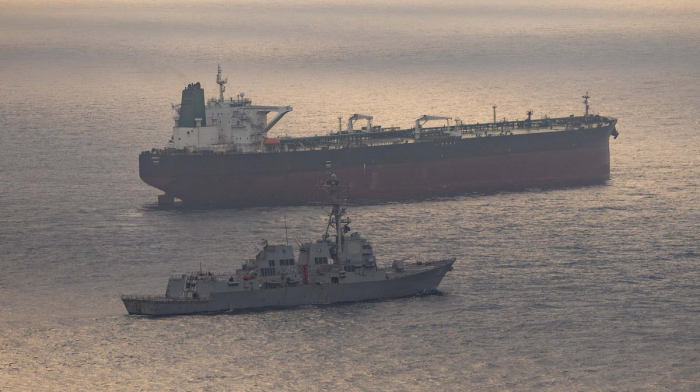
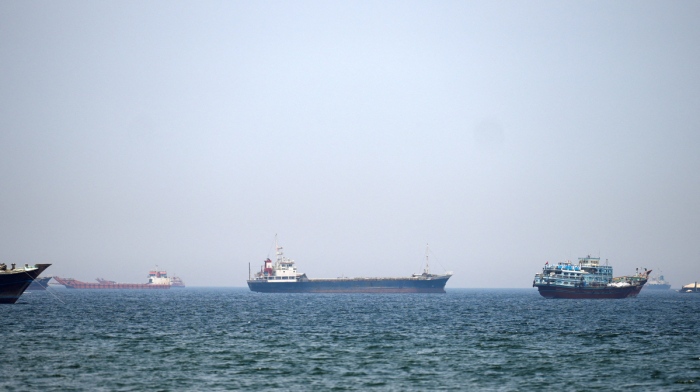
The Iranian leaders have commemorated the National Day of Persian Gulf stressing Tehran’s control over the Strait of Hormuz amid the U.S. maritime blockade of Iran’s southern ports, a fragile ceasefire, and stalled negotiations.
Iran’s Supreme Leader Mojtaba Khamenei warned “foreigners who commit evil” have no place in the Gulf, outlining a “new phase” for the Strait of Hormuz, while a senior adviser said U.S. blockade efforts would fail and could trigger confrontation.
Iran said on Thursday it would respond with “long and painful strikes” against U.S. positions if Washington resumed attacks, while also reasserting its claim over the Strait of Hormuz, complicating U.S. plans to form a coalition to reopen the waterway.
The United Nations has said that at least 21 people have been executed in Iran and more than 4,000 arrested since the outbreak of war involving the United States and Israel on 28 February.
President Donald Trump discussed how to mitigate the impact of a possible months-long U.S. blockade of Iran's ports with oil companies, a White House official said on Wednesday, as the U.S. renewed its calls for other nations to help open the Strait of Hormuz.
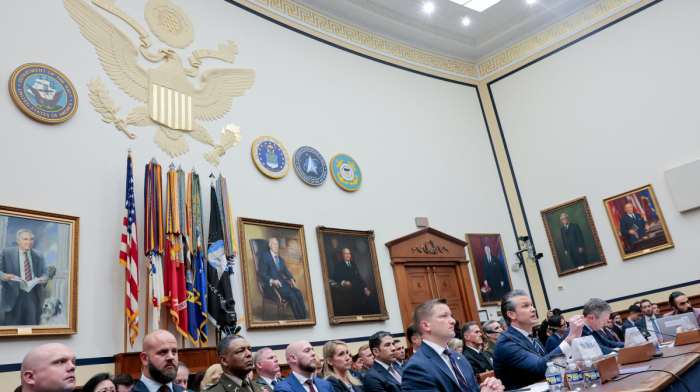
The U.S. war in Iran has cost $25 billion so far, a senior Pentagon official said on Wednesday (29 April), offering the first official estimate of the military’s price tag for the conflict. The sum is equivalent to NASA’s entire budget for this year.
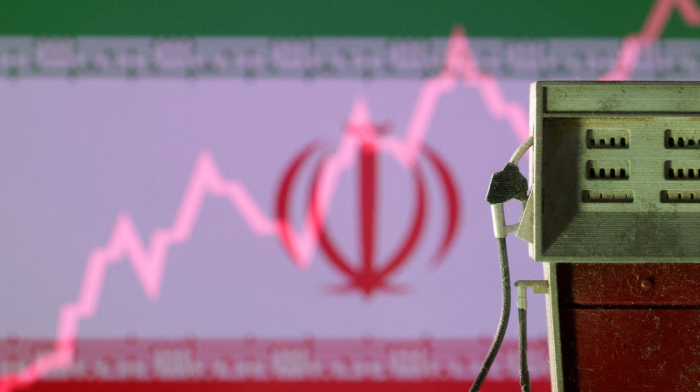
European airlines are facing their biggest challenge since the COVID-19 pandemic as the Iran war pushes up jet fuel prices and buffets travel through the Middle East, casting a shadow over the summer holiday season.
Iran could lose up to $435 million in oil exports due to a U.S. naval blockade, though a full institutional collapse remains unlikely, according to a geopolitical researcher.
Profits for worldwide energy company TotalEnergies have risen 41% in three months, as global energy supplies are disrupted after two months of war and oil prices have increased by 3%.
Efforts to end the Iran conflict were at an impasse on Tuesday with U.S. President Donald Trump unhappy with the latest proposal from Tehran, which he said had informed the U.S. it was in a "state of collapse" and figuring out its leadership situation.
Tensions between the United States and Iran remain high after a U.S. official said President Donald Trump was unhappy with a proposal from Tehran that does not deal with its nuclear programme. Washington is insisting that any talks must address Iran’s nuclear activities.
Tensions along the Israel-Lebanon border are intensifying as Israeli strikes push deeper into the Bekaa Valley, fuelling fears of wider escalation despite a fragile U.S.- and UN-brokered ceasefire.
Iran’s Foreign Minister, Abbas Araghchi, arrived in Russia on Monday for a diplomatic visit to shore up support after two months of conflict. He met Russian President Vladimir Putin for talks described by Moscow as “useful”.
The United States and Iran clashed at the United Nations on Monday over Tehran's nuclear programme and its selection to be one of dozens of vice presidents at a month-long conference to review the nuclear Non-Proliferation Treaty (NPT).
It's doubtful that Iran's proposal on resolving the two-month war will be accepted by President Donald Trump, an official source said, dampening hopes for a resolution to the conflict that has disrupted energy supplies, fuelled inflation, and killed thousands.
President Donald Trump said on Sunday Iran could telephone if it wants to negotiate an end to their two-month war. Tehran said the U.S. should remove obstacles to a deal, including its blockade of Iran's ports. Meanwhile Iranian Foreign Minister Abbas Araghchi arrives in St Petersburg for talks.