Tajikistan cuts electricity exports as it prepares for winter
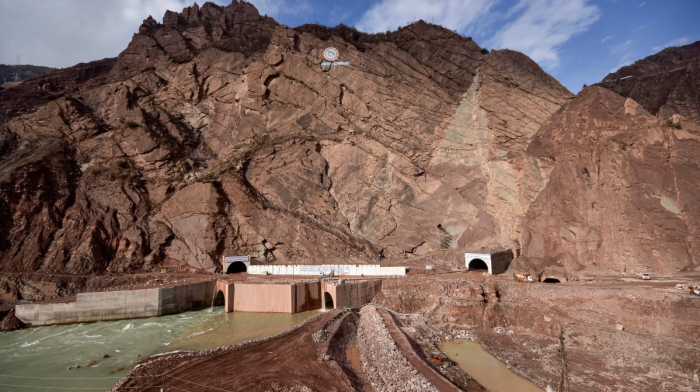
Tajikistan will reduce electricity exports and increase water reserves ahead of winter as the government seeks to improve domestic power supplies after last year’s seasonal shortages.
Temperatures above 40°C are scorching parts of Central Asia, prompting the World Health Organization to warn that extreme heat is becoming an increasing public health threat across the region.
Russia’s fuel shortages are spreading into Central Asia, exposing the region’s heavy reliance on Russian petrol and diesel as governments race to secure alternative supplies and contain rising prices.
The Green Climate Fund has approved a $30 million climate adaptation project for Tajikistan to help 73,500 people strengthen food security, protect water resources and build more resilient rural livelihoods.
China has launched a new direct rail freight route to Turkmenistan, expanding its transport links with Central Asia as trade and investment across the region continue to grow. The service will carry Chinese industrial and consumer goods to the Caspian region.
Kazakhstan has not received an official request from Russia for petrol supplies, Energy Minister Yerlan Akkenzhenov said, as fuel shortages and sales restrictions in Russia raise concerns over fuel supplies across Central Asia.
Kazakhstan secured agreements and investment commitments worth $12 billion during President Kassym-Jomart Tokayev's official visit to Brussels on 22–23 June, underlining the growing economic importance of ties between the European Union and Central Asia's largest economy.
Kazakh President Kassym-Jomart Tokayev arrived in Brussels for talks with EU leaders as Kazakhstan seeks to expand its partnership with Europe beyond energy and raw materials, with a growing focus on technology, connectivity and industrial cooperation.
Russia is seeking to expand cooperation with Central Asian countries in the exploration, extraction and processing of rare earth metals, underlining the region's growing importance in the global race for critical raw materials.
The Caspian Sea has retreated by up to 35 kilometres along Kazakhstan's coastline since 2006, raising fresh concerns about the future of the world's largest inland body of water and the communities, industries and ecosystems that depend on it.
Kazakhstan will begin routing selected government expenditures worth more than 100 million tenge ($190,000) through its digital tenge platform, expanding the use of the central bank digital currency to strengthen oversight of public spending.
Kazakhstan has signed a $10 billion agreement with Firebird and NVIDIA to build one of Central Asia's largest AI computing hubs, as governments increasingly compete for the infrastructure needed to power artificial intelligence.
Trade routes through Afghanistan took centre stage in Almaty as the European Union, Central Asian states and the United Nations discussed the country's role in shaping regional security and economic connectivity.
The U.S. is deepening engagement with Central Asia on critical minerals as global competition for strategic resources intensifies. The issue dominated talks in Astana between Washington and the five Central Asian states.
The European Union’s proposed 21st sanctions package against Russia could affect companies in Central Asia, including firms in Kazakhstan and Kyrgyzstan, as Brussels moves to tighten controls on sanctions circumvention.
Kazakhstan will require major businesses to introduce five-year water-saving plans as authorities warn that worsening shortages could threaten not only the environment but also the country's economy.
Kazakhstan has invited Cyprus to take an active role in the Trans-Caspian transport route, with President Kassym-Jomart Tokayev saying closer cooperation could link Kazakhstan’s land infrastructure with Cyprus’s maritime network and boost trade between Central Asia and the Mediterranean.
Kazakhstan has used a high-level visit by Hong Kong Chief Executive John Lee to promote itself as a gateway to Central Asia, offering investors access to industrial projects worth more than $100 billion and a growing regional market.
Kazakhstan has restored oil production after an accident at the Tengiz oil field briefly disrupted output last week, while also signalling its readiness to increase crude shipments through the Baku–Tbilisi–Ceyhan (BTC) pipeline.
Central Asia is facing growing water stress after five consecutive years of drought, with rising temperatures, depleted soil moisture and shrinking groundwater reserves placing increasing pressure on the region, according to a new EU report.
Kazakhstan has reiterated that no existing route can replace the Caspian Pipeline Consortium (CPC), which carries more than 80% of the country's crude oil exports through Russia to the Black Sea.
Russia and Kazakhstan signed 15 agreements during President Vladimir Putin’s state visit to Astana on Thursday (28 May), including deals on Kazakhstan’s first nuclear power plant and expanded oil cooperation with Russia.
Russian President Vladimir Putin arrived in Kazakhstan on Wednesday for a three-day state visit focused on energy, transport and economic cooperation with one of Moscow’s closest regional partners.
Japan and the United Nations Development Programme are launching a $3 million environmental project in Kazakhstan to support the Caspian Sea and improve water monitoring, amid growing concern over falling sea levels and risks to regional trade routes.
You can download the AnewZ application from Play Store and the App Store.